Great Gatsby Energy: Art Deco Mirrors and the Antique Glass Comeback
There's a party scene in The Great Gatsby that designers can't stop referencing: champagne towers, brass rails, and walls of smoky mirror throwing golden light across the room. A century after the Jazz Age, the art deco mirror is having its biggest moment since the 1920s. Designers are pulling antique mirror glass into hotel bars, powder rooms, and dining rooms because it does something plain mirror can't. It glows instead of glares.
If you're planning a space with deco leanings, here's why aged mirror is the material carrying the look, and how to use it well.
Why Art Deco Interior Design Keeps Coming Back
Art deco was born from optimism. The style celebrated geometry, luxury materials, and light itself, with mirror as one of its favorite tools. Deco designers wrapped columns in mirror, paneled ceilings with it, and framed it in stepped brass and lacquer.
The revival makes sense. After a decade of gray-on-greige minimalism, homeowners and hospitality brands want warmth and a little drama. Deco delivers both without tipping into clutter. Its bones are clean lines and symmetry, so it plays well with modern architecture. The mirror is what supplies the glamour.
What Makes Antique Mirror Glass Different
A standard mirror is a machine-made product: float glass, uniform silvering, perfect reflection. That perfection is exactly the problem in a deco space. It reads cold.
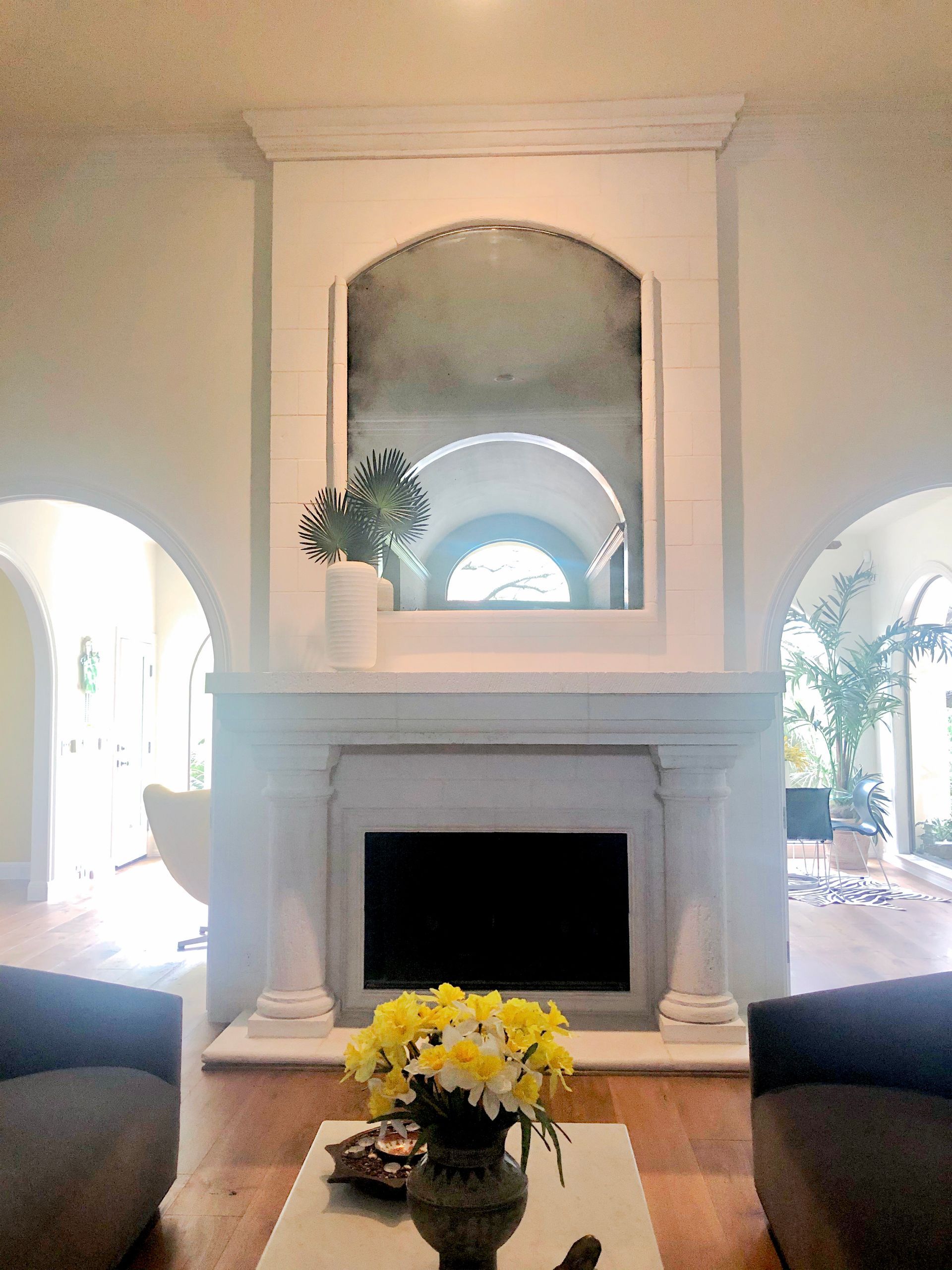
Antique mirror glass is made the old way. Artisans hand-silver the glass, then age it with controlled oxidation and organic distressing so every panel carries its own veining, clouding, and character. The reflection comes back softened and warm, closer to candlelight than fluorescent.
Antique mirrors from TCG Glass come in more than 20 finishes, from a heavily smoked Mercury to a subtle French Antique, plus Cloudy and Oil Slick effects. That range matters, because "antique" isn't one look. A Gatsby-style bar wants deep, dramatic aging. A deco powder room might only need a whisper of patina.
🥂 Speakeasy Secret: Order physical samples before committing to a finish, and look at them at night under warm bulbs, not just in daylight. Antique mirror transforms after dark, and the finish that looked too subtle at noon is often the one that steals the show at 8 p.m.
Where Designers Are Putting Art Deco Mirrors Now
The antique mirror wall
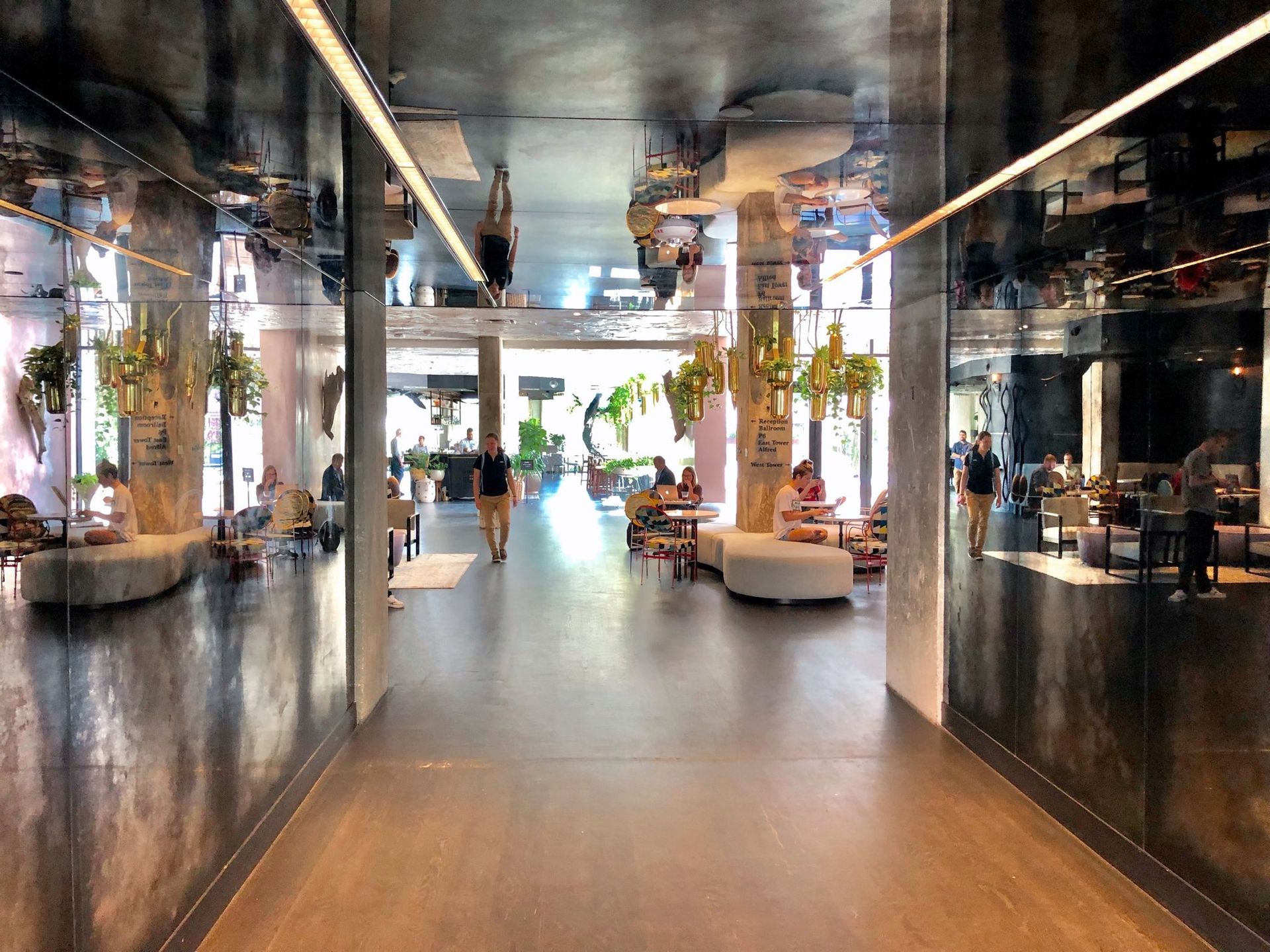
The statement move of the revival is the full antique mirror wall: floor-to-ceiling panels behind a bar, a banquette, or a dining room buffet. Large-format panels keep seam lines minimal, and the aged reflection doubles the room's light without doubling its harshness. Victoria's Secret understood this at scale. TCG Glass supplied the antique mirrors for every PINK store in North America.
Ceilings, the deco power move
Deco designers loved a mirrored ceiling, and the look is back in restaurants and hotel lobbies. Aged glass overhead adds height and shimmer while the patina keeps reflections abstract rather than literal.
Ceiling antique mirrors from TCG have appeared in installations like Mastro's Ocean Club in Miami and The Line Hotel in Austin.
The Art Deco Bathroom Is the Easiest Entry Point
Not every project has a hotel budget. The art deco bathroom is where most homeowners start, and it's a smart place to begin. The room is small, so a single gesture goes far: an antique mirror vanity wall, a framed aged mirror over black-and-white tile, or mirror-clad cabinet fronts.
Pair the glass with unlacquered brass, fluted tile, and globe lighting and you've hit the period notes without a full renovation. In our experience, clients who "just wanted a mirror for the powder room" are the same ones calling back six months later to panel the dining room.
Getting the Details Right: Frames, Color, and Scale
- Framing. Stepped, geometric frames in brass or dark wood are period-correct. Framed antique mirrors can be customized with gold leafing and etched detail for a true 1920s profile.
- Color. Deco wasn't shy. Smoked bronze and gold-toned mirror glass were everywhere in the period, and colored mirror in copper or champagne tones brings that back without overwhelming a room.
- Scale. Deco mirror was architectural, sized to the wall rather than hung as an accent. Go bigger than feels safe. A mirror that stops at the vanity reads modern; one that runs to the ceiling reads Gatsby.
🏛️ Design History Footnote: The mirrored interiors of the deco era were partly a technology story. Large plate glass had only recently become affordable, so wrapping a room in mirror was how a 1920s building showed off. Today's version flips it: the technology is easy, and the craft of hand-aging is the luxury.
Why Sourcing Matters More Than Style
Here's the catch with the antique mirror boom: the market is now full of printed "antique-effect" films and spray-on distressing that look fine in photos and flat in person. Real hand-silvered glass has depth you can see move as you walk past it.
TCG Glass has built a reputation among architects and designers for exactly this craft, with 20+ years of hand-silvering and organically antiquing mirror in the USA, which is why hospitality brands and luxury residential designers turn to them when a project calls for the real thing at architectural scale. Panels are custom cut to any dimension, with annealed, laminated, and safety-film options that meet ANSI Z97.1.
The Reflection of an Era
The deco revival isn't nostalgia for its own sake. It's a return to rooms designed to make people feel glamorous, and antique mirror is the shortest path to that feeling. Start with one wall, one ceiling, or one unforgettable powder room.
Reach out to TCG Glass with your dimensions and finish direction, and the team will help you spec the right glass for the space.
What's the best art deco mirror finish for a home project?
For most residential spaces, a light-to-medium antique finish like French Antique is the best starting point. It adds warmth and character while keeping the reflection usable for daily life. Save heavily distressed finishes like Mercury for bars, dining rooms, and feature walls where drama matters more than function.
Can antique mirror glass be used in humid rooms like bathrooms?
Yes, with the right backing. Quality antique mirrors are sealed to protect the silvering, and laminated or safety-film-backed options add durability in wet areas. Tell your fabricator the panel is going into a bathroom so they can recommend the right construction and edge sealing.